A waterproofing membrane must be inspected and approved before tiling begins to reduce the risk of water ingress, concealed leaks and costly building repairs. Remseal, with more than 43 years of waterproofing and remediation experience across Sydney, helps builders, contractors and property owners protect buildings through professional membrane waterproofing solutions for residential, commercial and civil projects.
A properly installed membrane is only effective when the substrate, coating thickness, coverage, junctions and penetrations meet the requirements of the specified waterproofing system. Checking these details before tiles cover the surface gives builders an opportunity to identify defects and arrange repairs while the membrane remains accessible.
Here are eight important checks builders should complete before approving a waterproofed area for tiling.
A pre-tiling inspection confirms that the membrane provides continuous protection across the required wet areas. Once tiles are installed, defects become harder to locate and repair, often requiring sections of finished flooring or walls to be removed.
Builders should check the membrane's condition, application quality and installation details before allowing the next trade to proceed. This helps reduce the risk of leaks, construction delays and disputes over waterproofing defects.
Check that the substrate is clean, stable and prepared according to the membrane manufacturer's instructions. Dust, grease, loose materials and unsuitable moisture levels can affect adhesion. Cracks and uneven sections should be addressed before application.
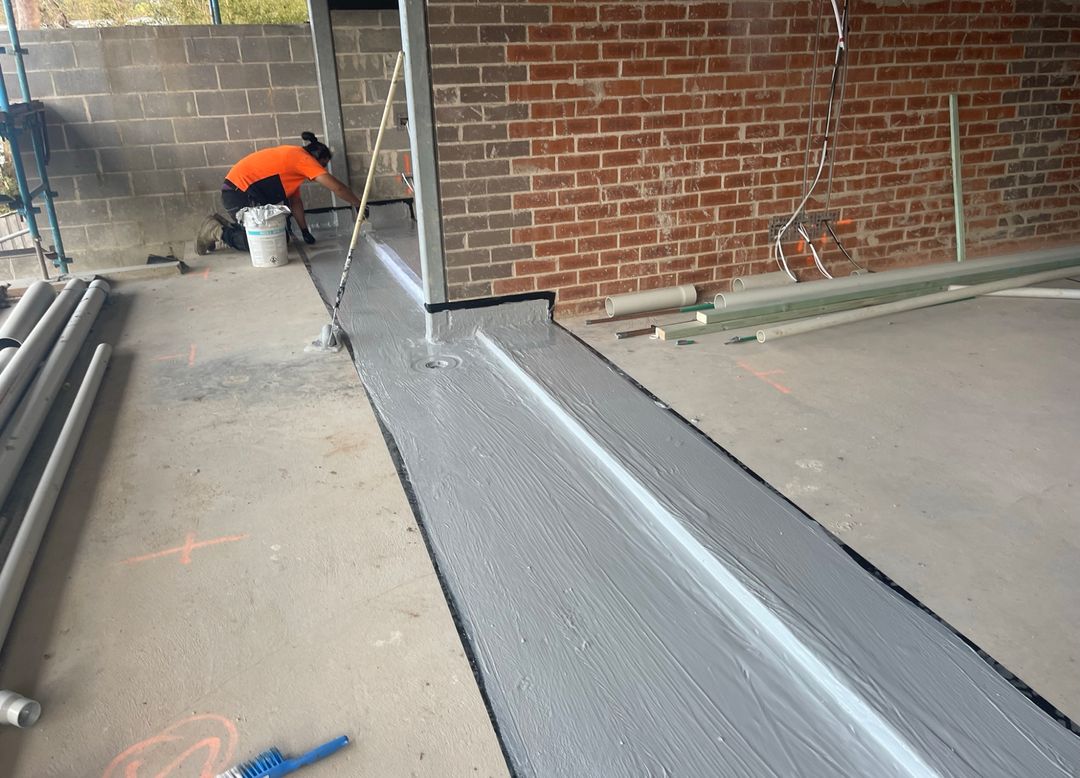
Confirm that all specified surfaces have been covered, including shower floors, walls, corners and other required wet-area sections. Check the specified wet and dry film thickness against the product's technical data sheet. Insufficient coating can compromise waterproofing performance.
Inspect for bubbles, pinholes, peeling, cracks, missed sections and inconsistent coating. Pay particular attention to areas where the membrane changes direction or meets another building element. Defects should be repaired using the approved system.
Check that bond breakers, fillets and reinforcement are installed where required. Wall-to-floor junctions are vulnerable to movement, so correct detailing helps maintain membrane continuity and reduces the risk of cracking.
Inspect around taps, pipes, floor wastes and drainage connections. Confirm that the membrane is correctly connected and sealed using the specified components. Poor detailing around these openings can create pathways for water to enter concealed spaces.
Check membrane edges, vertical terminations and waterstops against the approved design and applicable requirements. Incorrect termination heights or poorly installed waterstops can allow water to escape beyond the protected area.
Confirm that the membrane has cured for the period specified by its manufacturer. Temperature, humidity, ventilation and coating thickness can affect curing. Where required, verify dry film thickness before proceeding with tiling.
Where required by the project specifications or applicable standards, arrange continuity testing after the membrane has cured. Record photographs, product details, thickness measurements, test results and inspection approvals before tiles are installed.
Common problems include insufficient coating thickness, incomplete coverage, poor adhesion, pinholes, damaged membrane sections and incorrectly sealed penetrations. These defects can allow water to reach substrates, adjoining rooms and concealed building components.
Builders should not assume that a membrane is ready for tiling simply because it looks dry. Any suspected defect should be investigated, repaired using the approved system and checked again before the work is covered.
Two important Australian Standards guide waterproofing work:
The National Construction Code (NCC) also establishes relevant building performance requirements. Builders should follow the applicable NCC edition, relevant standards, approved project details and manufacturer's installation instructions.
AS 3740:2021 includes provisions for visual inspection before overlaying finishes and continuity testing in Appendix C. Flood testing is not automatically required for every project; its application depends on the relevant project and compliance requirements.
Tiling before inspection can conceal defects that may later cause leaks, moisture damage, mould and deterioration of building materials. Rectification may require removing tiles, repairing the membrane and reinstalling finished surfaces.
A pre-tiling inspection gives builders the opportunity to resolve problems before they become expensive remedial works.
Maintain a clear inspection record containing:
These records provide useful evidence of completed work and support future maintenance and defect investigations.
Responsibilities depend on the construction contract and applicable approval arrangements. Waterproofing installers must complete their work according to the specified system, while builders and site supervisors coordinate inspections and ensure defects are addressed before tiling. Authorised inspectors or certifiers may also have relevant inspection responsibilities.
With more than 43 years of waterproofing and remediation experience, Remseal provides solutions for residential, commercial, strata and civil properties across Sydney. Its experience includes liquid, cementitious, polyurethane, bituminous and sheet membrane systems.
The team also works across waterproofing, leak detection and remedial construction, helping property owners and building professionals address water ingress issues and protect building structures.
For professional membrane waterproofing in Sydney, contact Remseal on 1300 171 091 to discuss your project requirements.
Inspecting a waterproofing membrane before tiling helps builders identify defects, check installation quality and reduce future water damage risks. Paying attention to coverage, thickness, curing, junctions and penetrations can prevent avoidable remedial work.
For advice on membrane waterproofing and remedial solutions across Sydney, speak with the experienced team at Remseal.
Check membrane coverage, coating thickness, adhesion, curing, junctions, penetrations, waterstops and visible defects.
Visually inspect the surface, verify thickness against product specifications, examine critical details and arrange continuity testing where required.
Thickness depends on the selected product and its manufacturer's specified wet and dry film requirements. There is no universal thickness for every membrane.
Follow the manufacturer's curing instructions. The required time varies with product type, temperature, humidity and application thickness.
Flood testing is a recognised continuity testing method, but whether it is required depends on the applicable standard, project specifications and approval requirements.
Cracking, bubbling, peeling, pinholes, poor adhesion and water leaks can indicate membrane defects.
AS 3740:2021 provides for visual inspection before overlaying finishes in domestic wet areas. Other project requirements may also apply.
The affected section should be repaired using the approved system, allowed to cure and inspected again before tiling.
The installer, builder and relevant authorised inspectors may have different responsibilities depending on the project contract and approval arrangements.
We have the tools to locate and identify the main cause, and with our extensive experience we provide the best waterproofing solution that lasts.